
 Wildlife
of Japan
Hazel Grouse
Pheasants, Partridges & Quails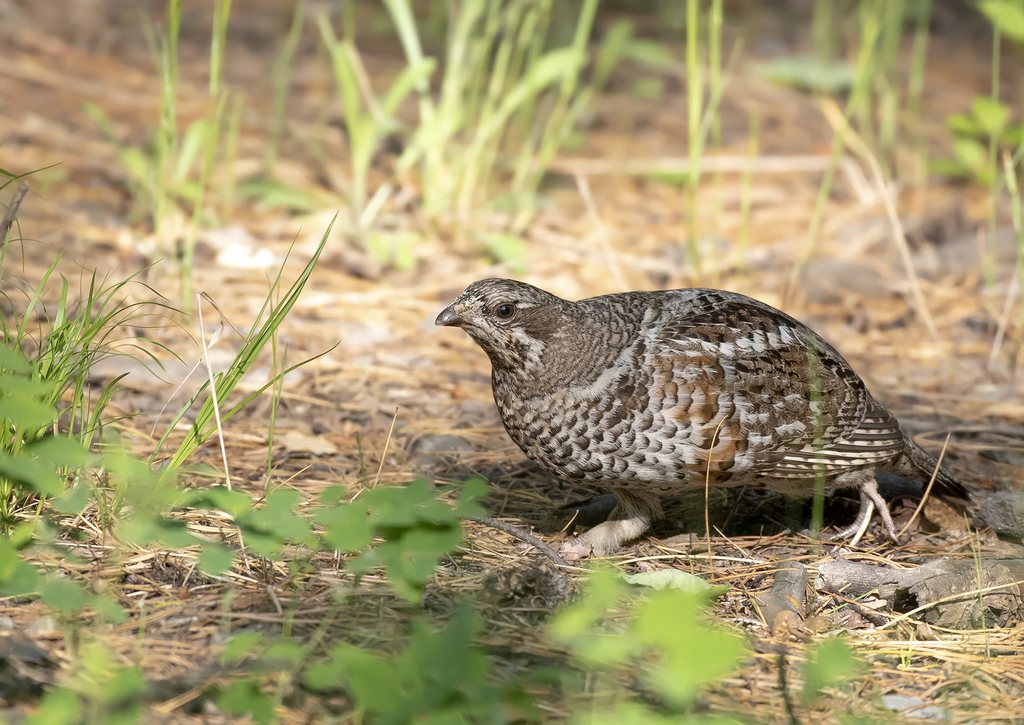
Photo: (c) Griha Hasanov, some rights reserved (CC BY) · CC BY 4.0 (May be cropped or resized)
Tetrastes bonasia
Rare visitor: recorded only occasionally in this country
Basic stats
Diet
Buds, shoots, leaves, berries and invertebrates
Habitat
Dense temperate and boreal woodland
Clutch size
4–9 eggs
The Hazel Grouse is one of the smaller grouse, with intricately barred and mottled grey-brown plumage that blends into the forest floor. Both sexes have a short crest and dark tail band; males show a black throat bordered in white. Its secretive habits and preference for dense woodland make it difficult to watch, and a thin whistled call or the whir of departing wings often reveals it first (Wikipedia, general species account).
Hazel Grouse feed on buds, shoots, leaves, berries and seasonal invertebrates, shifting location as snow melts and food becomes available. The nest is a shallow ground scrape hidden by vegetation. Work on the Hokkaido subspecies vicinitas recorded clutches of four to nine eggs, averaging seven. That subspecies is listed as Near Threatened on Japan's national Red List (Drovetski 1997; Japanese Journal of Ornithology 1985; Japan MOE 5th Red List 2026).
Quick answers
- What does the Hazel Grouse eat?
- Buds, shoots, leaves, berries and invertebrates
- What habitat does the Hazel Grouse live in?
- Dense temperate and boreal woodland
- How many eggs does the Hazel Grouse lay?
- 4–9 eggs
In Japan
GBIF holds 48 records of the Hazel Grouse from 3 protected areas in Japan, dated 1986 to 2024. Most come from Daisetsuzan National Park and Nemuro Peninsula & Lake Furen.
Where it has been recorded
- Daisetsuzan National Park 25 records, latest 2024
- Nemuro Peninsula & Lake Furen 12 records, latest 2023
- Shiretoko Peninsula 11 records, latest 2024
Covered in our place guides: Nemuro Peninsula & Lake Furen, Shiretoko Peninsula.
Seen on trips we host
- Japan in spring Bird Tour Asia, 2026
Also in our other guides: Korea.
Records: GBIF occurrence data matched to park boundaries (© OpenStreetMap contributors, ODbL; Wikidata). Counts show recording effort, not how common the species is.