 Wildlife
of Japan
Common Goldeneye
Ducks, Geese & Grebes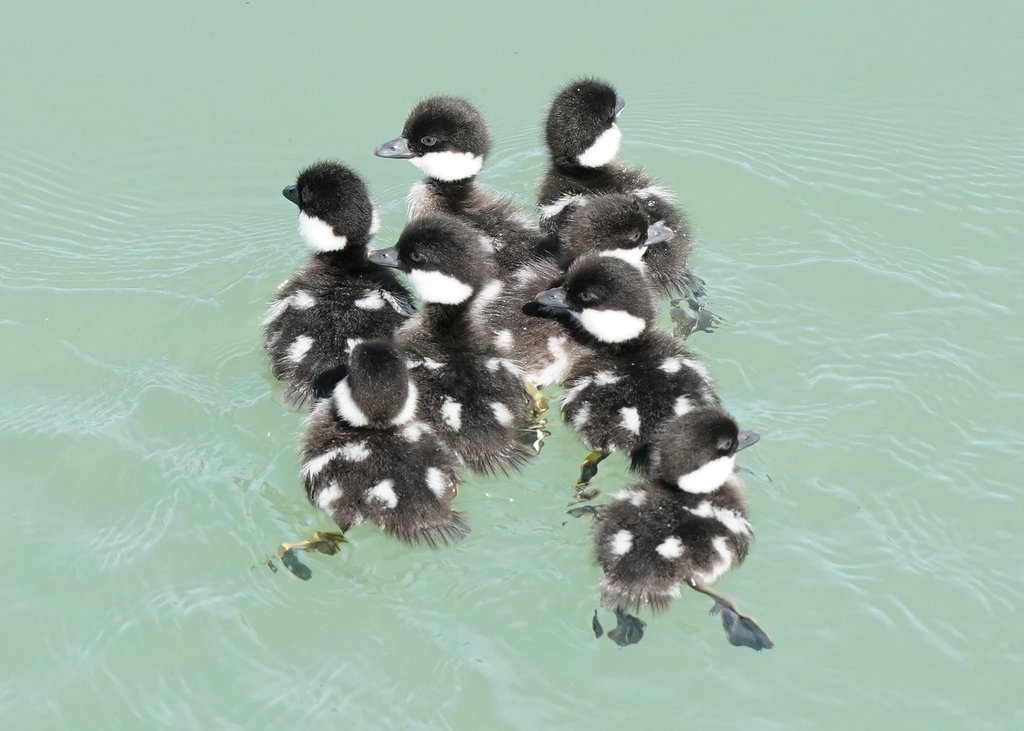
Photo: (c) Pam Hardy, some rights reserved (CC BY) · CC-BY (May be cropped or resized)
Bucephala clangula
Rare visitor: recorded only occasionally in this country
Basic stats
Diet
Aquatic invertebrates, fish and plant material
Habitat
Lakes, rivers and sheltered coasts
Size
40–51cm
The Common Goldeneye is a compact diving duck named for its bright yellow iris. Breeding males have a glossy dark-green head, round white cheek spot and crisp black-and-white body. Females have chocolate-brown heads, grey bodies and yellow-tipped dark bills. The steep forehead and triangular head profile are characteristic, while rapid wingbeats produce a distinctive whistling sound during flight (Wikipedia, general species account).
Goldeneyes breed on wooded lakes and rivers, placing their nests in tree cavities or nest boxes. They dive for aquatic insects, crustaceans, molluscs, small fish and some plant food, using their feet for propulsion. Ducklings leap from the nest cavity soon after hatching. Northern populations migrate to ice-free lakes and sheltered coastal waters, where flocks regularly winter in Japan (Wikipedia, general species account).
Quick answers
- What does the Common Goldeneye eat?
- Aquatic invertebrates, fish and plant material
- What habitat does the Common Goldeneye live in?
- Lakes, rivers and sheltered coasts
- How big is the Common Goldeneye?
- 40–51cm
In Japan
GBIF holds 1,201 records of the Common Goldeneye from 11 protected areas in Japan, dated 1978 to 2026. Most come from Nemuro Peninsula & Lake Furen and Abashiri Quasi National Park.
Where it has been recorded
- Nemuro Peninsula & Lake Furen 626 records, latest 2026
- Abashiri Quasi National Park 264 records, latest 2026
- Lake Tofutsu 125 records, latest 2024
- Biwako Quasi-National Park 76 records, latest 2024
- Fuji-Hakone-Izu National Park 36 records, latest 2024
- Lake Utonai 21 records, latest 2024
- Onuma Quasi-National Park 16 records, latest 2024
- Shiretoko Peninsula 15 records, latest 2024
Plus 3 more sites.
Covered in our place guides: Nemuro Peninsula & Lake Furen, Shiretoko Peninsula.
Seen on trips we host
- Winter Birding on Ice (Charley Hesse) Tropical Birding, 2012
- Winter Birding on Ice (Keith Barnes) Tropical Birding, 2013
- Winter Birding on Ice (Charley Hesse) Tropical Birding, 2014
- Winter Birding on Ice (Charley Hesse) Tropical Birding, 2015
Also in our other guides: Korea.
Records: GBIF occurrence data matched to park boundaries (© OpenStreetMap contributors, ODbL; Wikidata). Counts show recording effort, not how common the species is.