 Wildlife
of Japan
Mallard
Ducks, Geese & Grebes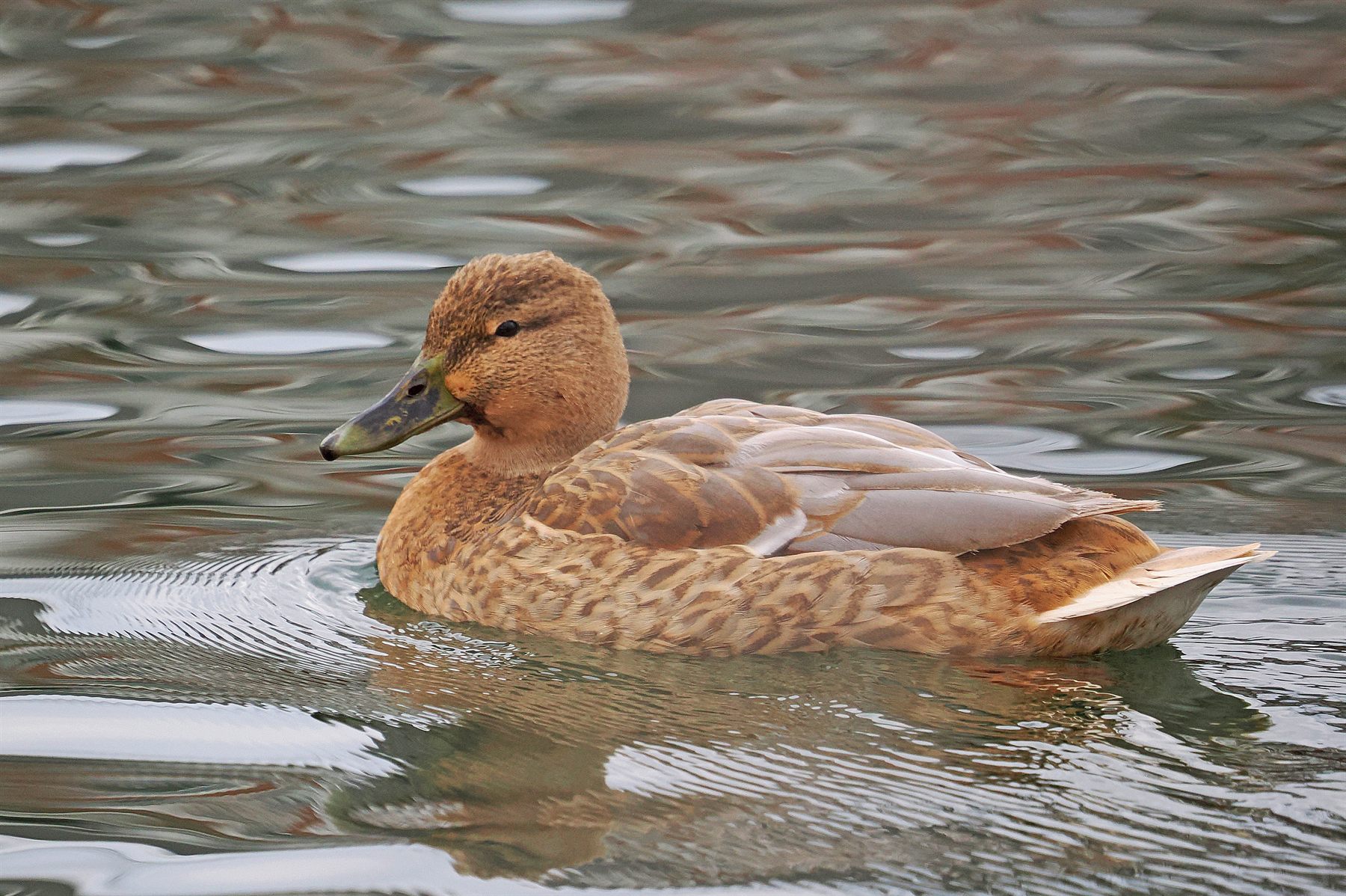
Photo: Judy Gallagher · CC BY 2.0 (May be cropped or resized)
Anas platyrhynchos
Rare visitor: recorded only occasionally in this country
Basic stats
Diet
Aquatic plants, seeds and invertebrates
Habitat
Shallow wetlands, lakes, rivers and coasts
Clutch size
8–13 eggs
Incubation period
27–28 days
Size
50–65cm
The Mallard is a familiar dabbling duck and the principal wild ancestor of most domestic duck breeds. Breeding males have a glossy green head, narrow white neck ring, chestnut breast and curled black tail feathers. Females are mottled brown with an orange-and-black bill. Both sexes show an iridescent blue wing speculum bordered in white, a useful feature when the bird is resting or flying (Cornell Lab of Ornithology).
Mallards use an exceptionally broad range of shallow freshwater and coastal habitats. They upend rather than dive, filtering seeds, aquatic vegetation and small invertebrates from the surface or muddy bottom, and also graze on land. The female chooses a concealed nest site, usually near water, and alone incubates the eggs and leads the downy ducklings after hatching. Northern populations migrate while others remain resident (Cornell Lab of Ornithology).
Quick answers
- What does the Mallard eat?
- Aquatic plants, seeds and invertebrates
- What habitat does the Mallard live in?
- Shallow wetlands, lakes, rivers and coasts
- How many eggs does the Mallard lay?
- 8–13 eggs
- How long are the eggs of the Mallard incubated?
- 27–28 days
- How big is the Mallard?
- 50–65cm
In Japan
GBIF holds 2,939 records of the Mallard from 21 protected areas in Japan, dated 1978 to 2026. Most come from Fuji-Hakone-Izu National Park and Biwako Quasi-National Park.
Where it has been recorded
- Fuji-Hakone-Izu National Park 575 records, latest 2026
- Biwako Quasi-National Park 515 records, latest 2024
- Abashiri Quasi National Park 472 records, latest 2026
- Nemuro Peninsula & Lake Furen 372 records, latest 2026
- Lake Tofutsu 283 records, latest 2024
- Higashiyoka-higata 148 records, latest 2024
- Lake Utonai 119 records, latest 2024
- Aso-Kuju National Park 85 records, latest 2024
Plus 13 more sites.
Covered in our place guides: Nemuro Peninsula & Lake Furen, Shiretoko Peninsula, Yanbaru, Northern Okinawa, Iriomote Island, Yakushima.
Seen on trips we host
- Winter Birding on Ice (Charley Hesse) Tropical Birding, 2015
- Winter Birding on Ice (Charley Hesse) Tropical Birding, 2018
- Winter Birding on Ice (Charley Hesse) Tropical Birding, 2020
Also in our other guides: Korea.
Records: GBIF occurrence data matched to park boundaries (© OpenStreetMap contributors, ODbL; Wikidata). Counts show recording effort, not how common the species is.