
 Wildlife
of Japan
Eastern Spot-billed Duck
Ducks, Geese & Grebes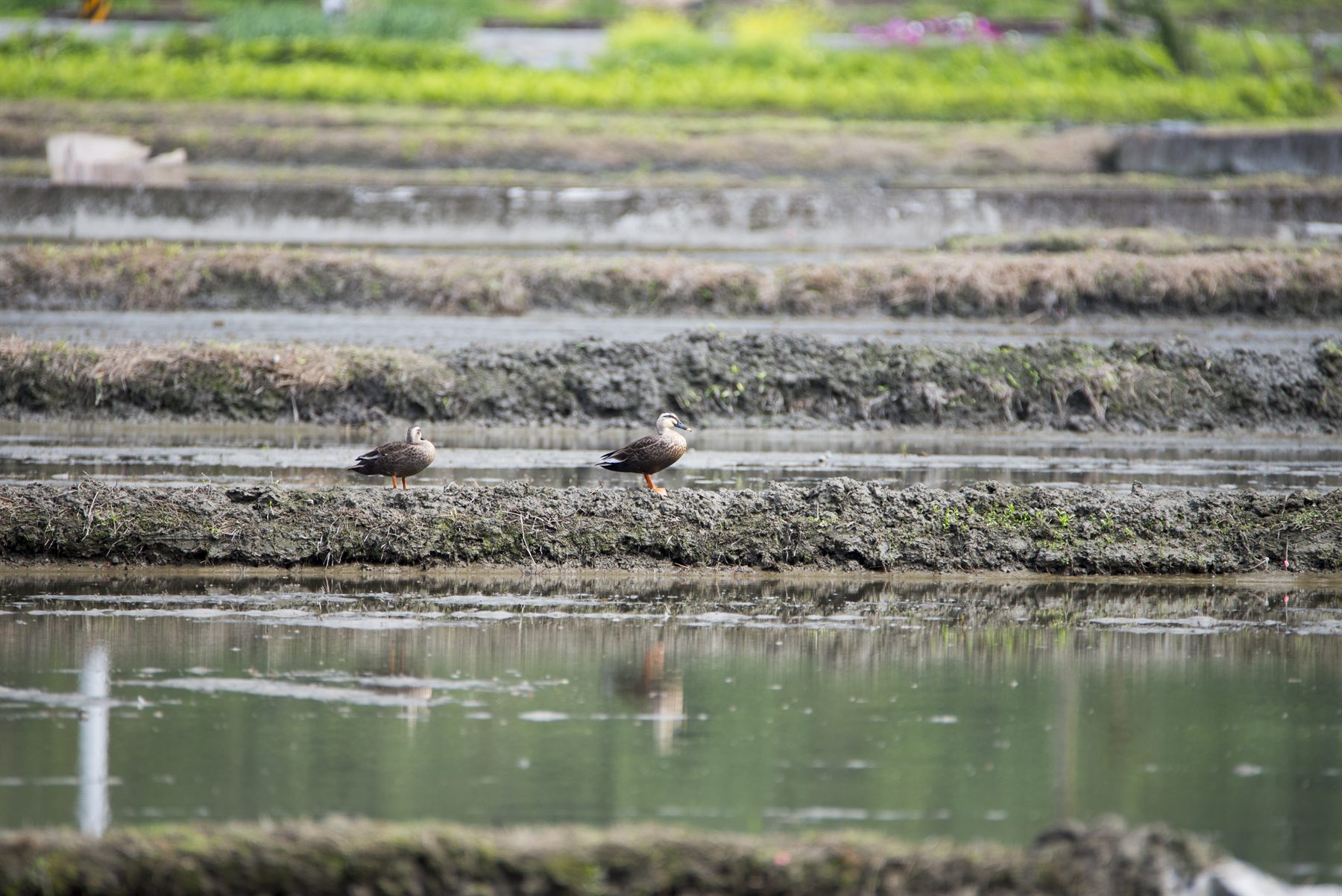
Photo: Licheng Shih · CC BY 2.0 (May be cropped or resized)
Anas zonorhyncha
Rare visitor: recorded only occasionally in this country
Basic stats
Diet
Aquatic plants, seeds and invertebrates
Habitat
Lakes, marshes, rivers and rice fields
Clutch size
7–10 eggs
The Eastern Spot-billed Duck is a large grey-brown dabbling duck with a dark crown and eye stripe, pale face and a black bill tipped bright yellow. A greenish-blue wing speculum is bordered by white, and orange-red legs can show clearly at close range. The sexes look alike, unlike the strongly dimorphic Mallard, although males and females have different calls (Wikipedia, general species account).
This duck inhabits lakes, marshes, slow rivers, flooded fields and other shallow wetlands across eastern Asia. It feeds by dabbling and upending for aquatic vegetation, seeds and small animals, and commonly rests on open banks or emergent structures. Pairs form seasonally, and the female nests in dense vegetation near water. The species is widespread in Japan as both a resident and locally moving wetland bird (Wikipedia, general species account).
Quick answers
- What does the Eastern Spot-billed Duck eat?
- Aquatic plants, seeds and invertebrates
- What habitat does the Eastern Spot-billed Duck live in?
- Lakes, marshes, rivers and rice fields
- How many eggs does the Eastern Spot-billed Duck lay?
- 7–10 eggs
In Japan
GBIF holds 1,394 records of the Eastern Spot-billed Duck from 22 protected areas in Japan, dated 1982 to 2026. Most come from Fuji-Hakone-Izu National Park and Biwako Quasi-National Park.
Where it has been recorded
- Fuji-Hakone-Izu National Park 381 records, latest 2026
- Biwako Quasi-National Park 285 records, latest 2026
- Higashiyoka-higata 130 records, latest 2024
- Iriomote Island 112 records, latest 2024
- Kasai-oki Sanmaisu tidal flat 109 records, latest 2026
- Onuma Quasi-National Park 56 records, latest 2025
- Abashiri Quasi National Park 51 records, latest 2024
- Tajimagahara 41 records, latest 2025
Plus 14 more sites.
Covered in our place guides: Iriomote Island, Yanbaru, Northern Okinawa, Nemuro Peninsula & Lake Furen, Shiretoko Peninsula, Yakushima.
Seen on trips we host
- Winter Birding on Ice (Charley Hesse) Tropical Birding, 2015
- Winter Birding on Ice (Charley Hesse) Tropical Birding, 2018
- Winter Birding on Ice, part 2 (Charley Hesse) Tropical Birding, 2019
- Winter Birding on Ice (Charley Hesse) Tropical Birding, 2020
Also in our other guides: Korea.
Records: GBIF occurrence data matched to park boundaries (© OpenStreetMap contributors, ODbL; Wikidata). Counts show recording effort, not how common the species is.